Plenty of us have set a money goal, felt hopeful at the start, and lost touch with it a few weeks later. Nothing about that pattern means you are bad with money.
When a goal stalls, meaning is usually what went missing.
So when you go looking for how to set financial goals you’ll stick to, most of what you find points you back at your own willpower. The thing that holds a goal in place is somewhere else entirely.
Most of us learned to build goals from the outside in. We pick them based on what we think we are supposed to do.
- “I should save more.”
- “I should pay down the debt.”
- “I should get better at budgeting.”
Goals built on “should” rarely last, because they feel heavy and they belong to somebody else.
SpendFirst starts somewhere different. You begin by getting curious about what you truly want and why you want it. That is the MeaningFirst Method.
The MeaningFirst Method takes a goal you think you are supposed to want and turns it into one you truly want. When a goal means something to you, the plan gets easier to follow, because it finally belongs to you.
Why meaning comes first
Before the strategies and before the timelines, you look at the meaning underneath the goal.
When you know why a goal matters, you can keep going. Without that, you have to talk yourself into caring, over and over, until one day you stop. That is where most goals come apart. With meaning underneath it, a goal feels personal, so following through gets easier.
Try the MeaningFirst Method on the goal you are carrying right now.
Find a few minutes where nothing else needs you. Step away from the noise of “should” and pressure, and notice what comes up. You can journal through it or just talk it through with yourself. There is no perfect way to do this. The only thing you need is honesty.
- What is the goal you have been thinking about lately? Say it plainly. It does not need to sound impressive. Just name it.
- What makes that goal feel important to you right now? Your first answer might be surface level. That is okay. Go one layer deeper.
- What do you picture changing in your life once you achieve it? Let yourself imagine your life on the other side of this goal. What is different? What feels easier? What opens up?
- How do you think it will feel in your body? Relief. Pride. Peace. Confidence. Lightness. Anything counts.
- What becomes possible then, that feels harder today? This is often the real reason you care. This is the part that pulls you forward.
- When you think about the pace, what feels right? A quick push, or a steady rhythm that lets you enjoy life along the way?
Take your time with these. You may notice your first answer is the familiar one, because it’s the one you’ve said before. Sit with the question a little longer and the real reason usually shows up.
That deeper reason is the real goal.
These work for any goal, at any stage. Expect your answers to shift as your life does.
Once you know why your goal matters to you, the plan is easier to build and easier to keep.
Example in action: paying off debt
Here is what that looked like for a client I will call Susan.
She came to me wanting to get out of debt (about $18,000 across a few credit cards). So she had a clear goal. But when I asked why it mattered, her first answer was, “Because I should. I mean, debt is bad, right?”
That is an outside-in answer. It is what she thought she was supposed to say.
So I asked her, when you picture yourself being debt free, what comes to mind? Why this goal, and why now?
She paused. Then she said, “I think I just want to stop feeling guilty every time I swipe my card. Like I’m doing something wrong. I want to be able to go out to dinner without this voice in my head saying I shouldn’t.”
Now we were getting somewhere.
What would it feel like in your body if that guilt was gone?
“Lighter,” she said immediately. “Like I could just breathe.”
And once the debt is gone and the guilt is gone, what becomes easier? What opens up that feels out of reach today?
She thought about it. “I think I’d finally feel ready to plan for bigger things. Like maybe starting to save for a house, or taking a real vacation without stressing about it the whole time. I’ve been putting those things off because I feel like I don’t deserve them yet. Like I have to fix this first.”
There it was. The real reason.
Susan wanted the life she had been putting on hold until the debt was gone. That is meaning.
I see this constantly. Debt payoff feels like the goal, but it is almost never the real goal. It is the obstacle between you and what you really want. Name what is on the other side of the debt, and you have found the reason that keeps you going.
Now, when a hard month hits, Susan does not just think about the numbers. She thinks about that feeling of lightness, about planning a vacation without guilt, about moving one step closer to what is next.
Maybe what opens up is travel. Saving more consistently. Changing jobs. Waking up a little lighter. All of those matter. Whatever fits you is the answer.
What happens when you start with meaning
Once you have explored the meaning behind a goal, you feel more rooted and more clear. The goal feels connected to your life instead of added on top of it. Your confidence grows, because you understand yourself better. Progress becomes something you can keep going even when life is full.
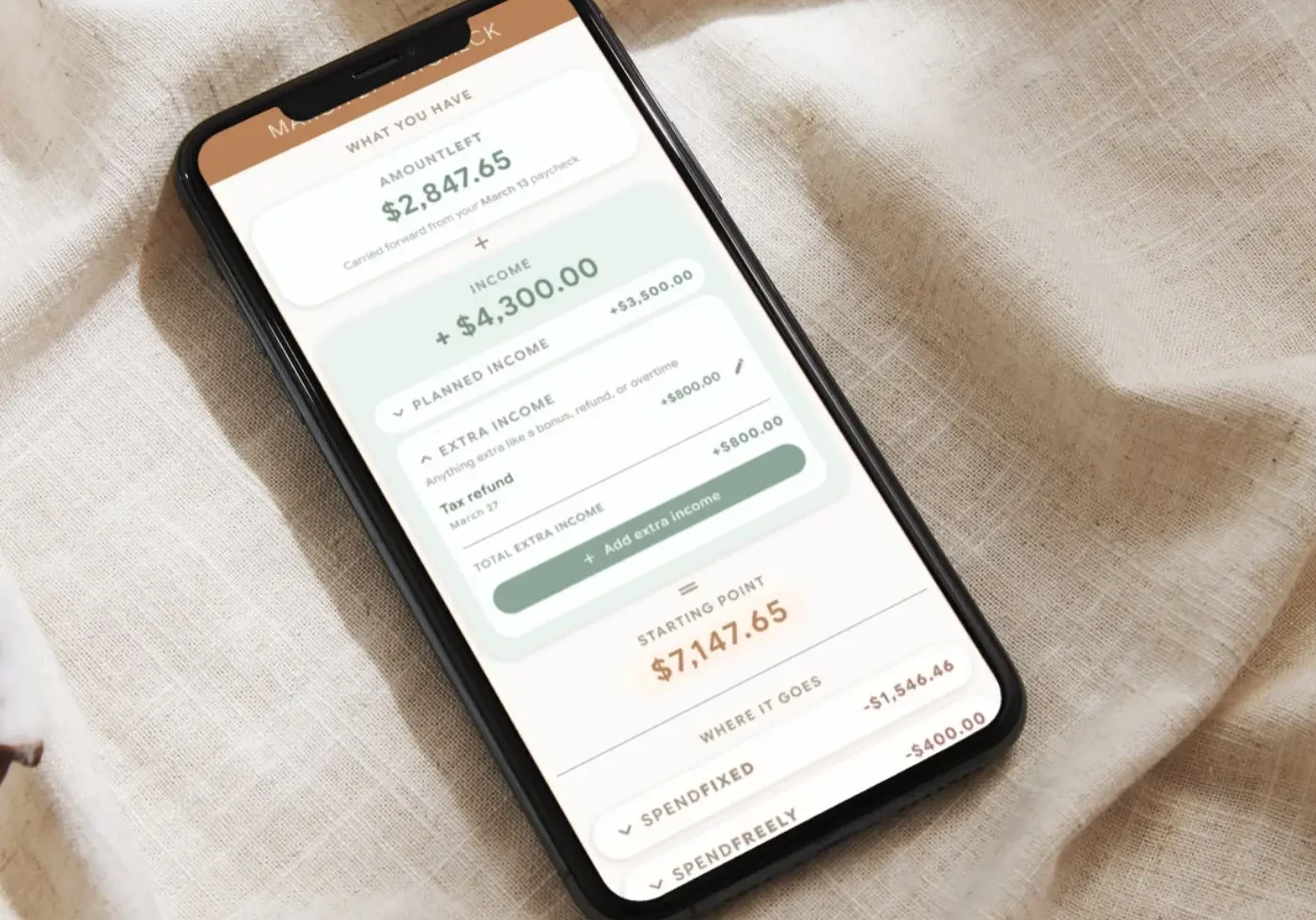
And now the goal can meet the numbers. Your SpendFlex is your real margin, what is left for bigger goals like savings and debt after your life is fully funded by SpendFixed, SpendFreely, and SpendFuture. That margin is what moves you toward the goal, and the question stops being “what do I want?” and becomes “when can I have it?”
Say the goal is $5,000 for a vacation and your SpendFlex is $200 a month. That is about 25 months. If you want it sooner, you can see exactly where to look: a SpendFixed bill you could lower, a SpendFreely trim for a few months, or a SpendFuture category you could pause while you focus. Each change is a choice, and you can see how it moves the date. That cable bill you lower by $80 a month is your vacation arriving seven months sooner. When you can see your path forward that clearly, choices feel like progress instead of sacrifice.
And put that margin behind one goal at a time. Spread it across five priorities and each one barely moves, which makes it hard to believe you are getting anywhere. Pick one goal and give it everything until it is done, then move to the next. That focus is what turns a goal that once felt impossible into one that feels inevitable.
And if the pace still feels slow after every change you are willing to make, that is okay. Slow progress is still progress, and it beats giving up because the numbers are not dramatic enough. The clearer you are on why the goal matters, the more creative you get about reaching it.
That is what the MeaningFirst Method is for. Once you know the real reason behind a goal, the work stops feeling like sacrifice and starts feeling worth it.A Personal Note From Kelsa
Start with the meaning, then build the plan
Once the goal is really theirs, you’ll likely notice two things first: you can spend without the guilt, I have watched this click for hundreds of people, and it goes the same way every time: the moment a goal becomes truly yours, everything about the plan gets easier. You can spend without the guilt, and you know exactly what you’re working toward.
Once you are clear on your why, the next step is a system that supports it. That is the whole point of SpendFirst: a way to stop living paycheck to paycheck that runs on your real life instead of on willpower. That is also why most budgets fall apart: they lean on willpower instead of a system built for the way your life actually works.
At spendfirst.com/start you will find free tools for:
- Turning a meaningful goal into a plan you can follow
- Building a system that works with your real life instead of against it
- Managing your money in a way that supports what you actually want
Start with the free tools at spendfirst.com/start →
You do not have to figure this out alone. Start with the meaning, then let the system show you the how. That is how to set financial goals you’ll stick to.
The MeaningFirst Method is Chapter 14 of SpendFirst.
Pre-order SpendFirst →