Three structural flaws in traditional budgeting and what actually works instead
Prefer to listen? Kelsa walks through this in Chapter 1 of the podcast: Why Traditional Budgeting Keeps Failing You.
At some point, you sat down with a blank budget template and meant it.
You filled in your income.
You listed your expenses.
You looked at the number at the bottom… the one that said you should have money left over… and you felt something like hope.
Then life happened – a car repair, school supplies or a month where you just spent more than usual on groceries because you were busy and you were tired and cooking every night wasn’t realistic.
The number at the bottom disappeared. So then the budget gets abandoned, and somewhere in the back of your mind, a quiet conclusion formed: I’m just not good at this.
You’re not bad with money. The budget you were handed was built for a life you don’t actually live.
Traditional budgeting has real structural problems and when a system fails consistently, across millions of people who genuinely tried, the problem isn’t the people.
It’s the system.
Here are three reasons traditional budgets don’t work, and what SpendFirst does instead.
Flaw 1: It isn’t built for how you actually spend
A traditional budget gives you one line for groceries. One number for the whole month.
But that’s not how grocery shopping works. You go to Costco twice, you hit the regular store mid-week for produce, then something gets ordered from Amazon. And even after grabbing groceries, your partner picks something up on the way home.
That one grocery line item is actually fifteen transactions spread across the month: different days, different amounts, different cards, different stores.
And groceries are just one category. Multiply that by every spending area in your life and you have a budget that looks clean on paper and has almost no relationship to how money actually moves.
The template isn’t wrong because you filled it out incorrectly. It’s wrong because it asked you to flatten the texture of real life into a single number. That was never going to hold.
Flaw 2: Life doesn’t happen in monthly increments
The traditional budget assumes your money resets on the first of every month. Clean slate. Fresh start.
But your paycheck doesn’t arrive on the first. Your bills don’t all land at the end. And the decisions you made last month don’t disappear when the calendar turns.
If you overspent in October, that follows you into November. If your first paycheck of the month doesn’t arrive until the 7th but three bills were due the first week, that gap is a real problem… and no monthly budget accounts for it.
There’s also the category of expenses that don’t happen every month: car registration, home repairs, holiday gifts, medical bills, the annual subscription you forget about until it hits. These are real expenses. You know they’re coming, but the traditional monthly budget has no place for them, so they show up as emergencies even though they aren’t.
If you don’t live your life in monthly increments, you shouldn’t be managing your money that way.
The system needs to match your actual rhythm, which is built around paychecks, not calendar months.
Flaw 3: It shows you numbers. It doesn’t show you what to do.
A budget is a list.
A list of income, a list of expenses, and a number at the bottom.
What it doesn’t tell you is what to actually do with any of it.
It’s a bit like a personal trainer who hands you a weekly plan that says:
- Monday: arms
- Tuesday: legs
- Wednesday: total body
- Thursday: off
- Friday: back
You’d go to the gym on Monday and realize you still don’t know what to do. The plan tells you what, not how.
A traditional budget does the same thing: here are your categories and here’s how much you spent.
But when something unexpected comes up, and it always does, you have no way to see the ripple effect. Does this derail the whole month? Can you absorb it? What has to shift?
The budget can’t tell you, so you guess. But guessing doesn’t build confidence.
The real reason this matters
The worst outcome of a flawed system isn’t that it doesn’t work.
It’s that when it doesn’t work, people assume they’re the problem.
You tried. You were diligent for a while. And then something happened and the budget fell apart and you felt like you failed… even though what actually happened is that the tool wasn’t built for your life.
The same thing happens with money goals. They start strong, then a few weeks in they stop feeling like yours. That is usually a sign the goal was never built on anything, which is why it helps to set financial goals you’ll stick to before you build a plan around them.
You’re not bad with money.
You’re not undisciplined.
You’re a capable person who was handed a system that wasn’t designed for how you actually live and earn and spend.That matters because the beliefs you form about yourself during those failed attempts follow you. They make you less likely to try again. They make you feel like money management isn’t for you.
And none of that is true.
What SpendFirst does instead
SpendFirst is built around your paycheck rhythm, not the calendar month. Each paycheck gets its own plan aligned to when money actually arrives and what it needs to cover.
It organizes money into three movements:
- SpendFixed — your committed monthly expenses. Bills, subscriptions, anything with a due date.
- SpendFreely — your everyday spending. The money that’s yours to use as life happens.
- SpendFuture — the expenses you know are coming but don’t hit every month. Car registration, holidays, home repairs. The things that feel like surprises only because no system ever built a place for them.
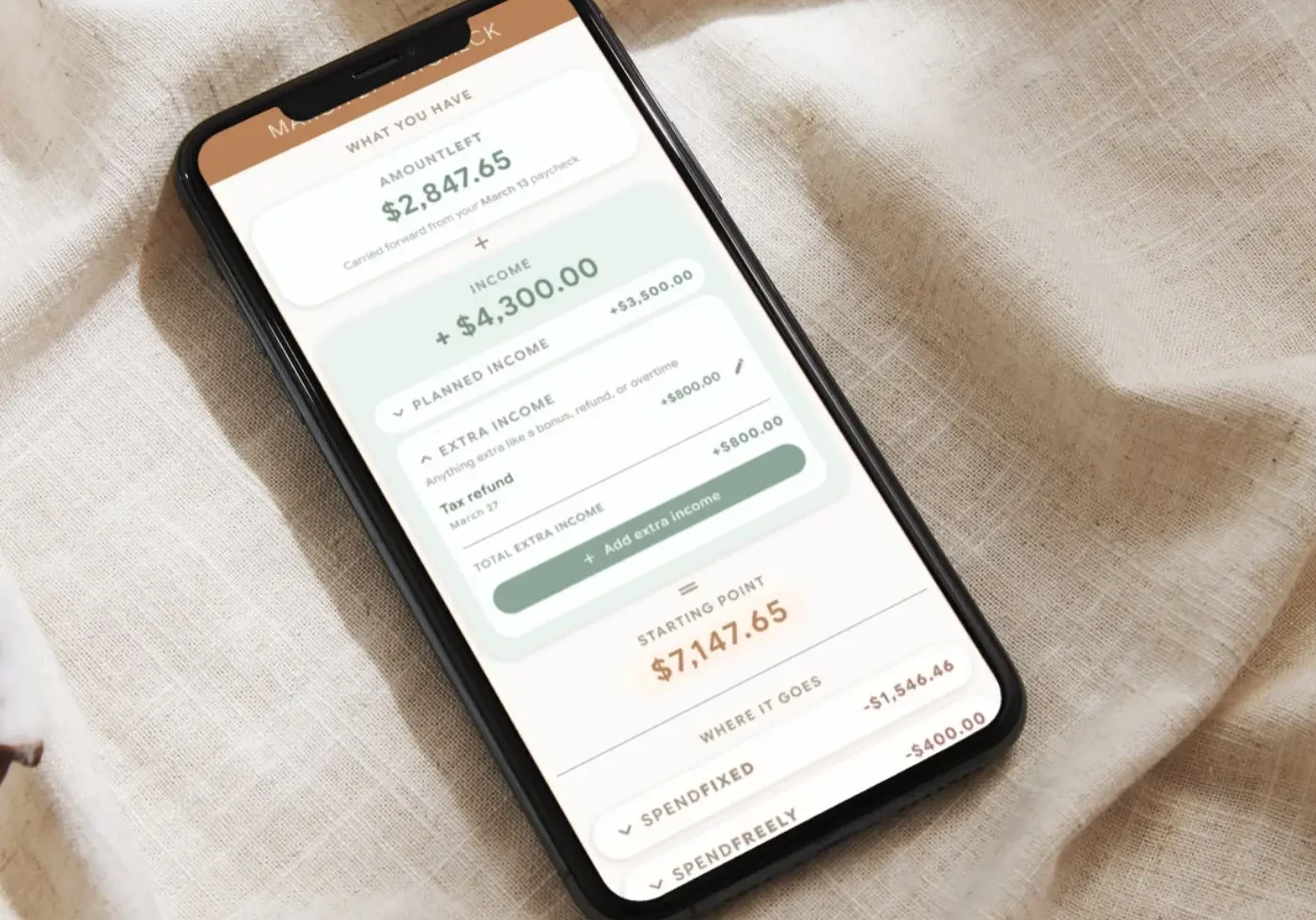
Once your money is mapped this way, one number emerges: AmountLeft — what will actually be in your account after everything committed to this paycheck clears. It’s not your bank balance. AmountLeft is the real number… the one you can make decisions from.
It’s dynamic. When something unexpected comes up, you add it in and instantly see the ripple across future paychecks. You don’t have to guess at the impact. You can see it.
And because it’s built around your life (your paycheck timing, your specific expenses, your actual rhythm) it doesn’t ask you to change how you live. It changes how clearly you can see.
Ready to try a system that actually fits?
The SpendFirst Quick Start Guide walks you through the first steps of mapping your money the right way. No spreadsheet required. No tracking every dollar.