“How much money should I keep in my checking account?” It’s one of the questions I get asked most. And my answer is always a question back: what is that account doing for you?
When one checking account does everything, there’s no good answer. Your paycheck lands there, and your bills, groceries, gas and takeout all come out of it, so you keep “enough” in there and hope enough means enough. The amount gets easier to see once each account has one job.
Your main checking account pays the bills
Your paycheck goes into your main checking account, and your bills come out of it: rent or mortgage, utilities, insurance, loan payments. In SpendFirst, this is your SpendFixed, the bills you cover month after month that each have a set due date.
So the amount to keep here is what your SpendFixed bills need before your next paycheck.
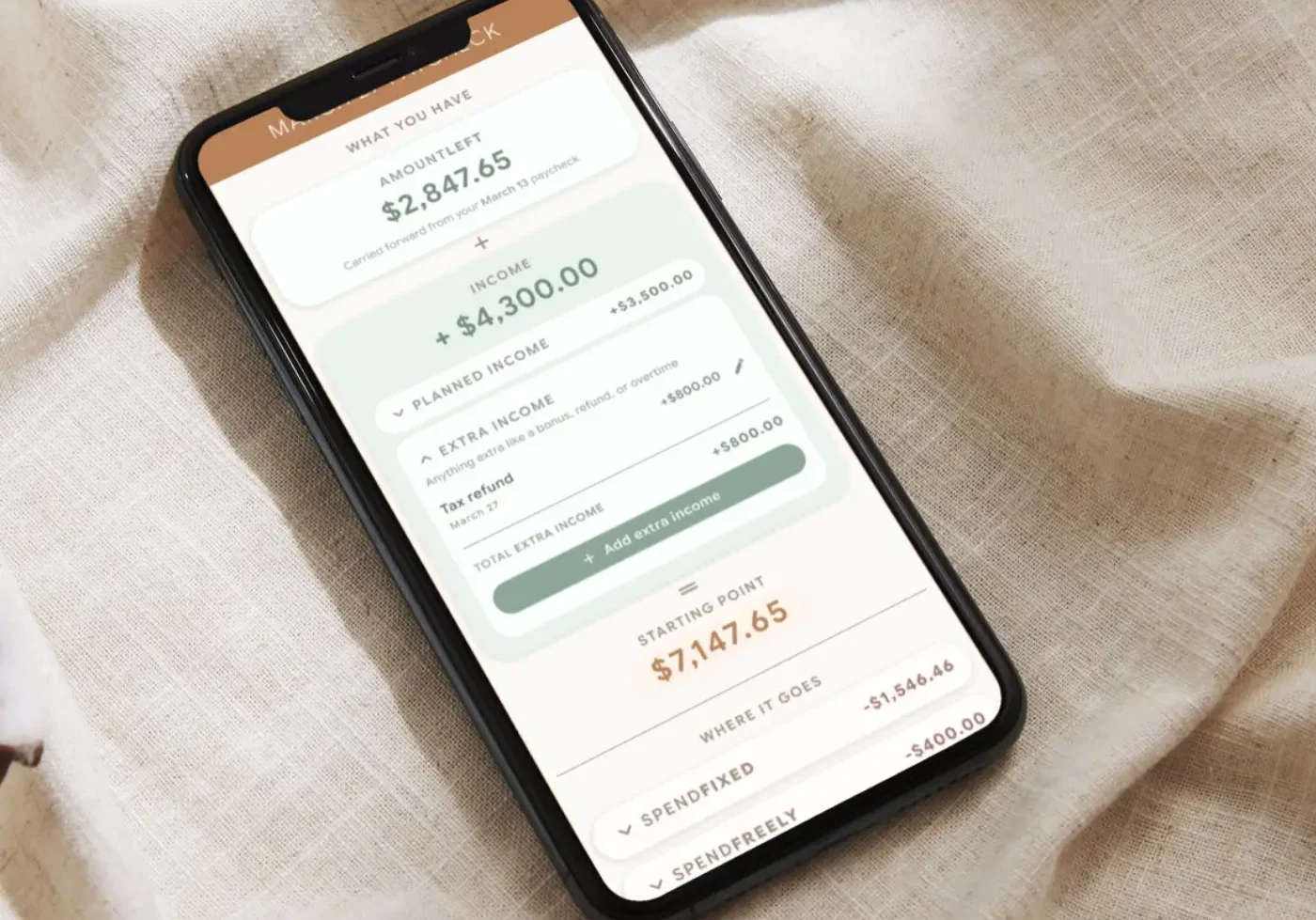
The number to watch is your AmountLeft: what will actually be in your main checking account after everything committed to this paycheck clears. It’s not your bank balance. Your balance shows everything sitting in the account today, including money that already belongs to the electric bill on the 22nd.
Your second checking account is for everyday life
Open a second checking account, ideally at the same bank so transfers are easy. This becomes your SpendFreely account.
Every payday, transfer a set amount into it, just like it’s another bill you’re paying. Then use only that account for everyday spending all pay period: groceries, gas, dining out, toiletries.
That’s the amount to keep in your second account: what your everyday life costs between paychecks. To find it, ask yourself how much you usually need in a typical week, then multiply by two if you’re paid every two weeks or twice a month. It doesn’t need to be perfect. Some pay periods will cost less and a cushion builds, and others will cost more and that cushion helps absorb it.
With its own account, you always know where you stand at a glance. If there’s $100 left and payday is tomorrow, that sushi splurge might feel guilt-free. If your gas tank is empty and groceries are low, maybe leftovers sound a little better.
It works for couples too. Sometimes I buy groceries, sometimes my husband, Michael, does. We both buy gas, but not at the same time. Because we spend from the same account, we both know in real time whether we’re on track. No more “How did we overspend?” conversations at the end of the month when nobody can remember what happened.
You don’t have to track every dollar or keep a spreadsheet. You just look at one balance.
What doesn’t belong in checking
Money for things that don’t happen every month, like car registration, holidays and home repairs, is your SpendFuture. It goes into savings accounts, not checking. I keep mine in what I call buckets at an online bank: annual bills, clothing, pet stuff, kids’ stuff, medical, home repairs, and a separate one for home decor. When the expense comes up, the money is already there, waiting.
Your emergency fund lives in savings too. When money that has a future job sits in checking, it looks spendable. That’s how the car insurance money becomes this week’s dinner out without anyone deciding it.
Some banks make multiple accounts and named buckets much easier than others. Here are banks that make this easy.
What about a cushion?
Some people like a little extra in checking just in case. That’s a personal call, and there’s no wrong answer.
Here’s what I do. I keep $2,500 in a savings account at my local bank, the same bank as my checking. It gives me immediate access to cash if something goes wrong with my checking account or I need money fast. For the record, I’ve never actually needed it for that. But the peace of mind is worth it to me.
Whatever you choose, give the cushion its own account and its own name. Then you know it’s there, and you know it’s not for groceries.
Put it together
On payday, your paycheck lands in main checking, and what your SpendFixed bills need before the next paycheck stays there. Your SpendFreely amount moves to your second checking account, and your SpendFuture moves to savings. What’s left after that is real.
The easiest way to see your own numbers is to plan your first paycheck this way, one payday at a time.
Walk through your next paycheck step by step and see exactly what stays in checking, what moves, and what’s left.
Want it on paper? The Money Flow Printable puts the payday steps on one page.
AmountLeft, the number that tells you where you stand, is Chapter 8 of SpendFirst.