“How much should I save per paycheck?” You’ve probably heard an answer already, like save 20%, save 10% or pay yourself first. Those rules are easy to remember, but they don’t know anything about your life: when your bills are due, what your car insurance costs, or what’s coming in March.
So I don’t start with a percentage. I start with your paycheck. When you budget by paycheck, saving happens in two places, and each one has its own number.
Step 1: Save for what you already know is coming
Some of what you save is money you’re going to spend, on things like car registration, the holidays, the annual insurance premium or new tires. In SpendFirst, this is your SpendFuture: money set aside each paycheck for expenses that do not happen every month, so they stop feeling like surprises.
Here’s how to find the number:
- List every expense you can see coming in the next 12 months.
- Add them up.
- Divide by 12 for your monthly amount, then split it across the paychecks you get each month. Some people move it all on one day each month instead, like it has its own due date.
If your list adds up to $3,900, that’s $325 a month. If you’re paid twice a month, that’s $162.50 from each paycheck. The Year-at-a-Glance Planner walks you through the list.
This money goes into savings accounts, one for each job, and it’s meant to be spent. When the bill comes, the money is already waiting.
Step 2: Save what’s really left
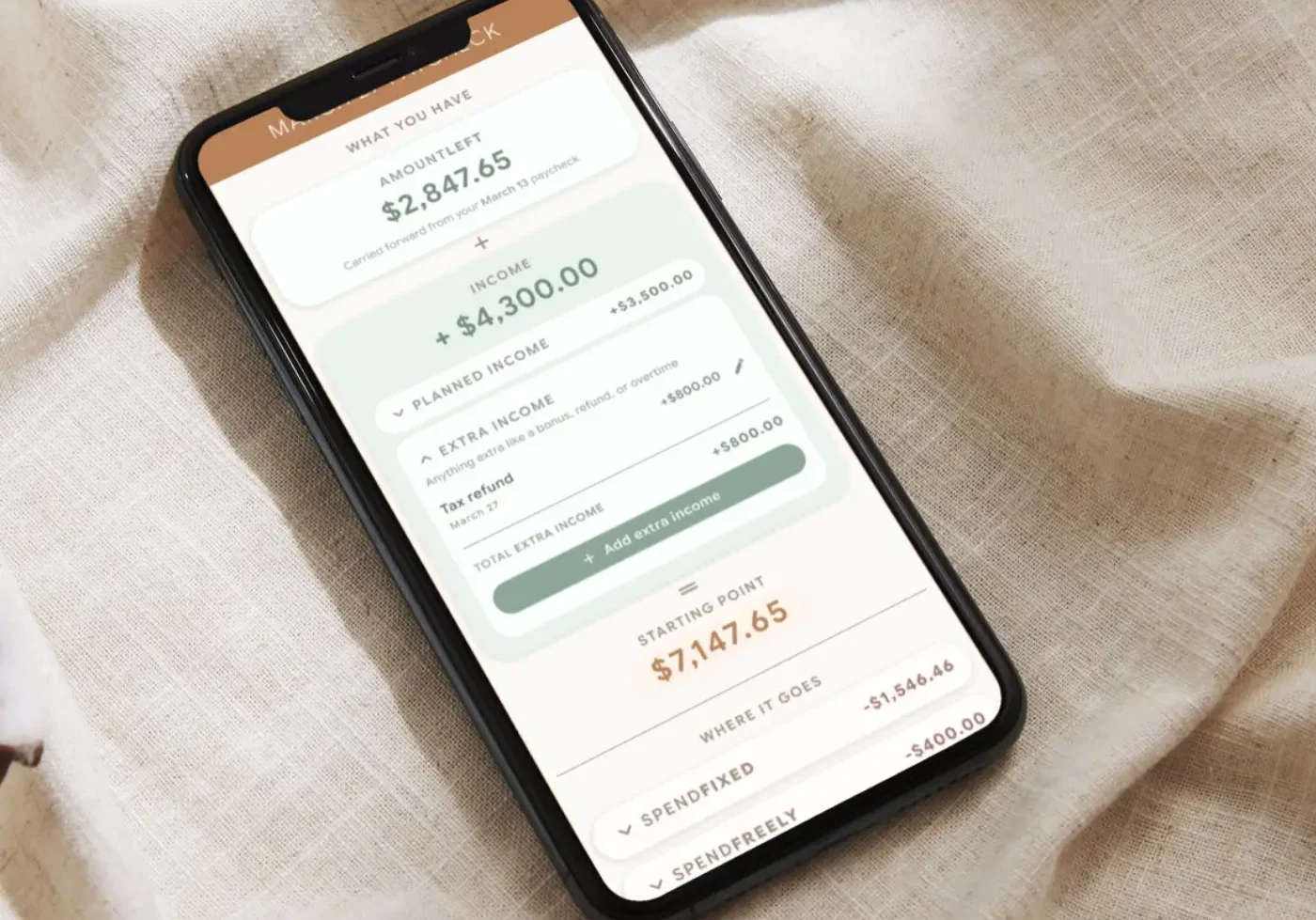
Once your bills, your everyday spending and your SpendFuture are covered, whatever is left is your SpendFlex: your real, honest margin for bigger goals like savings and debt.
That’s your answer to how much to save per paycheck for the bigger stuff. It isn’t a percentage someone else picked. It’s what your paycheck can actually carry, and you know it’s safe to move because everything else is already funded.
Where it goes first matters. Start by getting further ahead on SpendFuture, so you’re ready for what’s six weeks away and not just six months away. Next, get the first month of your emergency fund in place. After that, your SpendFlex can go toward the goal that matters most to you right now, whether that’s paying down debt, a down payment or something else.
Paying off debt at the same time? Build your foundation first, then speed up the debt payoff. Get your SpendFuture running, and aim for one month of your emergency baseline expenses in savings before you start throwing extra at your debt. Otherwise the next car repair goes right back on the card. Here’s more on whether to save or pay off debt.
How much of my paycheck should I save?
Two numbers, and both come from your own paycheck. The first is your SpendFuture amount from Step 1. The second is what’s really left after everything else is covered. Add them together, and that’s how much of each paycheck goes to savings.
If you’ve tried saving a set percentage and it never stuck, it’s worth asking whether that percentage ever fit your life. A 20% rule can’t see that your rent went up or that your car registration is due in March. A number built from your actual bills and your actual paycheck is one you can keep hitting.
What if the number is small?
Then start small, because the amount matters a lot less than the habit. If you want a way to see whether it’s moving, your Financial Progress Number shows what share of your income is going toward your future. Between 5% and 10% means you’re building stability, and if you started at 3% and you’re now at 8%, that’s a win.
A client of mine started a savings account with $12 a month earmarked for home decor updates. It was only twelve dollars, but she became someone who saves, and that part lasts longer than any amount.
And don’t wait to open the account until you’ve saved something. You’ve got it backward. Opening the account is the first step, not the last. Once it’s there, with a name on it, saving into it gets a lot easier.
Give your savings a name
Name each account for what it’s funding. For years, one of my accounts was called “Lake House Fund.” Every time I logged in, I saw what we were working toward. When we bought the lake house in Michigan, I renamed it for the next goal.
A name turns a balance into a reason. If you want help choosing the goal, here’s how to save for a goal you’ll stick with.
The short answer
How much of your paycheck should you save? Enough to cover what you know is coming, plus whatever is really left after that, pointed at the goal that matters most to you. Your numbers come from your life, not a rule.
The easiest place to see them is in your first SpendFirst paycheck.
Plan one real paycheck step by step and see your SpendFuture and SpendFlex numbers for yourself.
SpendFlex, what’s really left for your bigger goals, is Chapter 10 of SpendFirst.