The cash envelope system has been around a long time. I have clients who tell me stories of their grandparents using envelopes to make sure there was enough for groceries, gas, restaurants and entertainment. So how does envelope budgeting work, and does it still work now that most people barely carry cash? It does, but it looks a little different.
The old cash envelope system
When your money has a plan, each dollar has a job. Rent or mortgage, utilities and the car payment are the fixed bills you pay every month. In SpendFirst, those are called SpendFixed, and they’re paid straight from your checking account with auto pay or bill pay. Everyday expenses like gas and groceries are where the envelopes come in.
Under the old system, you take out a set amount of cash each pay period and divide it into envelopes. Online you’ll see this called cash stuffing. The envelope marked groceries is used only for groceries. If there’s money left at the end, you can leave it there for a month with a bigger grocery bill, or use it for something else. It’s yours.
There’s more than one way to set it up:
- By category. Groceries, gas, eating out, entertainment, each in its own envelope.
- By needs and wants. One envelope for what you need, one for what you want.
- One big envelope. Or no envelope at all, just everyday cash kept separate in your wallet.
A lot of clients start with many envelopes and end up with one. Once they know what their everyday life costs, they put all of it in one place.
What is one benefit of envelope budgeting?
We know one big envelope works for our family. Some weeks we’re really good. We grocery shop on Sunday, meal prep, pack lunches, eat leftovers and don’t eat out. Other weeks we’re super busy, maybe sick, exhausted, and don’t have the time or energy to cook. Those weeks we still spend from the same pot, and it’s not a problem, because we didn’t buy groceries that week. It evens itself out.
That’s the biggest benefit of envelope budgeting: you decide the amount before you spend, you can see what’s left at a glance, and because you fill them each payday, you’re planning by paycheck instead of by month.
For a lot of people it doesn’t matter which envelope the cash comes from, because cash is so tangible that you hold yourself accountable either way. Others worry that if they have cash on hand they’ll spend it on anything, which is why separate envelopes exist.
Where envelopes get hard
Envelopes break down when there are too many of them. Lauren had been using cash envelopes for three months and was proud of finally sticking with a system. Then her best friend texted that she was in town for one night only and wanted to grab dinner. Lauren’s eating-out envelope was empty, because earlier that week her son had a meltdown and she’d grabbed fast food on the way home from school. She told her friend no, stayed home and cried, and the next morning she threw all the envelopes away. “I spent more energy managing the envelopes than I did prioritizing the things that really matter to me,” she told me.
With one everyday envelope instead of a stack of them, she could have said yes to dinner and adjusted somewhere else that week, maybe with leftovers for lunch the next day or by skipping the Thursday coffee run. Cash has other limits too. It doesn’t work for online orders, not everyone wants it sitting around the house, and if you and a partner both shop, one envelope can only be in one place at a time.
The modern envelope system
Instead of cash and envelopes, use separate bank accounts. It’s the same idea, except your envelopes live at the bank.
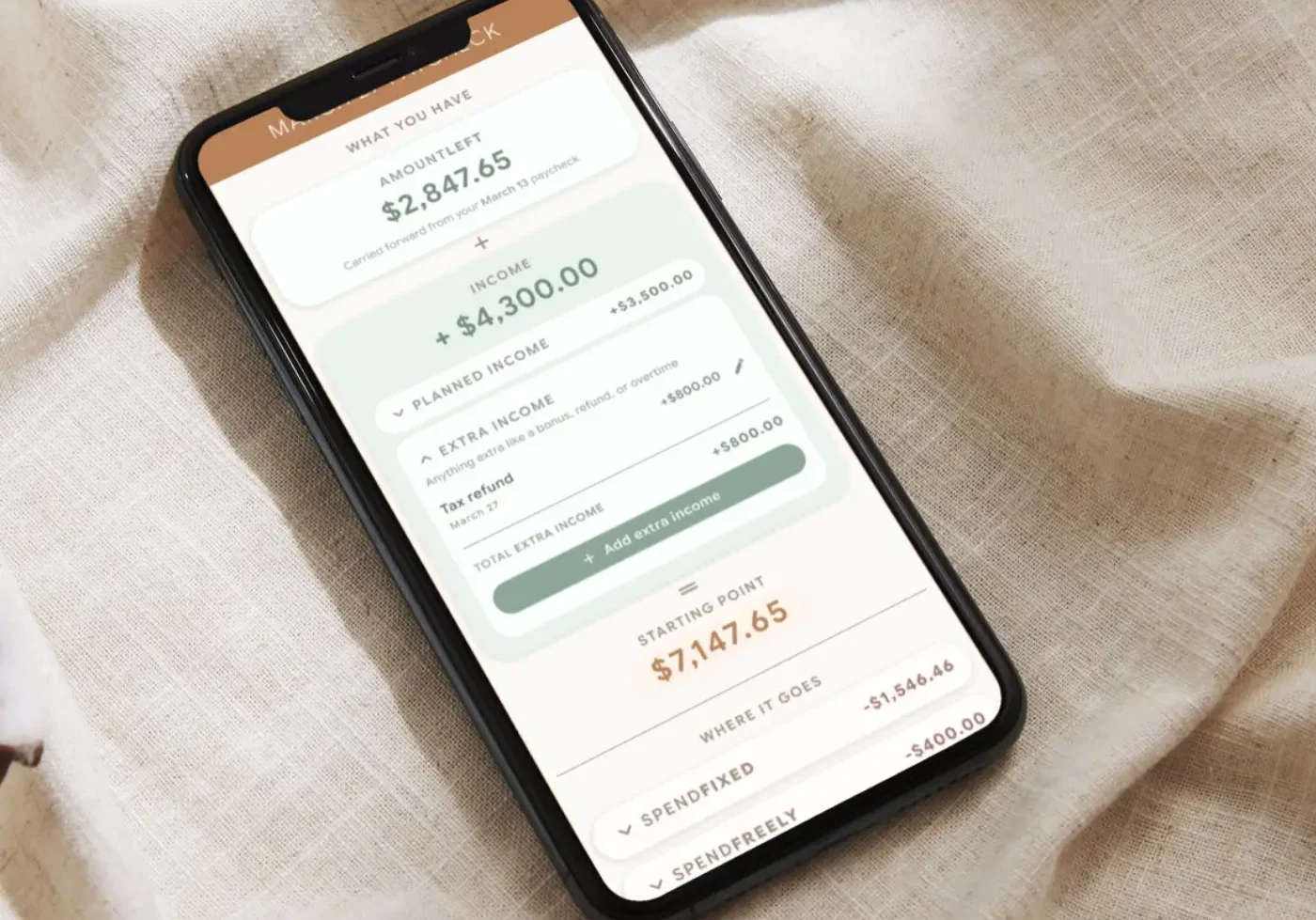
Your everyday envelope is a second checking account. This is your SpendFreely: your everyday spending money, the flexible expenses with no due date like groceries, gas and dining out, kept in a separate account you spend from each day. Every payday, move a set amount in and spend from it with the debit card all pay period, in stores or online. That’s your one big envelope, with a balance you can check from your phone, and both partners can see it in real time.
Your other envelopes are savings accounts. Car repair, travel, clothing and gifts each get their own account and their own name. In SpendFirst, this is your SpendFuture: money set aside each paycheck for expenses that do not happen every month. Many online banks let you open as many named savings accounts as you want, with no fees and no minimum balance. Here are banks that make this easy.
Moving money from savings back to checking can take a day or more at some banks, so plan transfers a little ahead. That small delay also keeps the money just far enough out of reach.
Put those together and you have the three ways your money moves: bills from main checking, everyday life from SpendFreely, and what’s coming from SpendFuture.
Old or new, pick what works
If cash envelopes work for you, keep using them, and keep your everyday spending in one envelope instead of many. Whether you use cash or accounts, the goal is the same: you decide what each dollar is for before you spend it. That’s how you stop living paycheck to paycheck.
Set up the modern version in about 20 minutes. The free Quick Start Guide walks through the three money movements and how to find your AmountLeft.
SpendFreely, the everyday envelope, is Chapter 5 of SpendFirst.