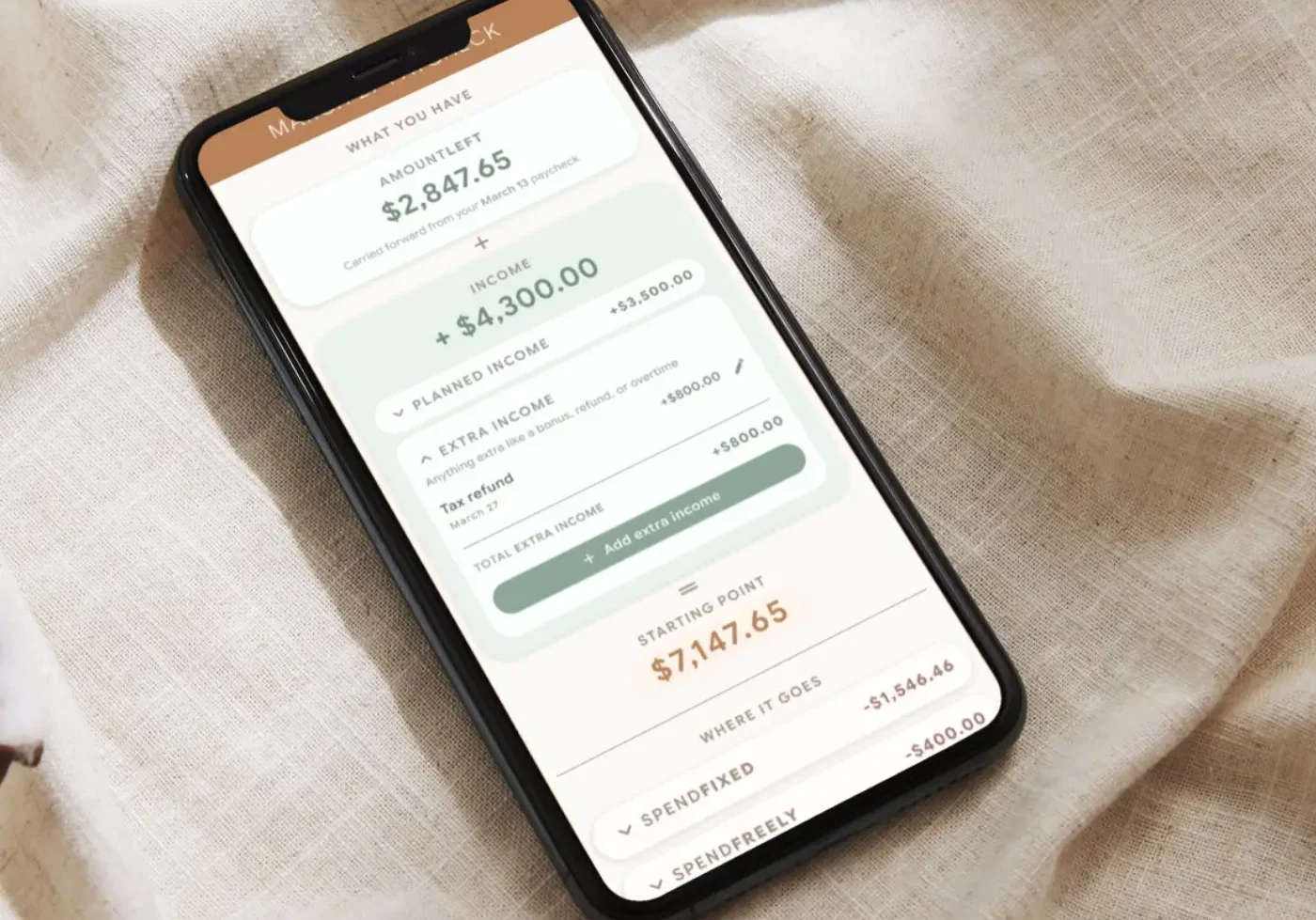
A big step toward getting a handle on your money is knowing your expenses, and the types of expenses in a budget aren’t sorted the way most people think.
“Just make a budget.” That’s the advice you’ve probably heard. It’s the first step financial experts say you’re supposed to take. (Never mind that most traditional budgets don’t work.)
It sounds so easy, and yet it’s just not.
My mom would sit at our dining room table with a legal pad, a pen, a calculator and a stack of bills (this was before computers and budgeting apps), and I would watch her try, sometimes for hours, to get a handle on where her money was going. She had a good job, was smart and worked hard… yet her efforts seemed futile. She is the reason I do what I do.
When you think of your “monthly expenses,” chances are you think of your bills: the things that happen every month and likely have a due date. In SpendFirst, these are your SpendFixed expenses, and they include things like your rent or mortgage, car payment, cell phone bill, utility bills and streaming subscriptions. They happen every month, usually on a set date and typically for the same dollar amount.
It makes sense that this is what you think of first, because these are the easiest expenses to identify and remember.
Unfortunately, that’s just one of three categories of expenses you need to know to build your plan. There are still two more really important categories to plan for.
What makes this work is that the other two categories end up looking and acting just like your bills, the easiest kind to identify and remember. Once they do, your plan comes together quickly.
Know your expenses by their timing
To make thinking about your expenses easy, look at one thing and one thing only: the timing of the expense.
If you were to fill out a “monthly budget” today, chances are it’s organized by “area of life.” You’ll see a “Housing” section where you put your rent or mortgage, utilities, home repairs, and maybe services like a landscaper, housekeeper or pool cleaner.
Then you’ll see a “Transportation” section where you put your car payments, gas, insurance and repairs.
And so on and so on.
A much better way to think about your expenses is to sort them by the timing of how they happen naturally. That way, once you’ve identified your expenses, you can put a few simple changes in place to manage them based on that timing. In SpendFirst, these are the three ways your money moves.
These three categories represent what most people’s finances look like. There’s money going out at all different times and for different amounts. Chances are it feels a bit chaotic, which is one of the reasons most people are just “winging it” when it comes to their money.
Getting organized by the timing of your expenses is the first step in unraveling that chaos and getting control of it.
Category 1: SpendFixed (your bills)
Your first category is your SpendFixed expenses. Think of these as your bills. They happen monthly, typically on a certain day or date and for a certain amount.
Examples
The most common expenses in this category are your actual bills: rent or mortgage, internet, subscriptions, car payment and so on. But other expenses go here too, and they may or may not apply to you.
If you pay something like daycare every Monday, that’s SpendFixed, since it happens on a set, recurring schedule and probably for a set amount.
If you pay a housekeeper monthly, but sometimes they come the third week of the month and other times the fourth week, that’s still SpendFixed. It happens monthly, on a set dateish and probably for a set amount.
If your electric bill changes from one month to the next, it’s still SpendFixed, because you can likely see the change coming. Here in Phoenix, we run our A/C all summer long, so our electric bills are higher in the summer, but we know that’s coming and can plan for it. It happens monthly, on a set date and for a set amountish.
Note: A bill doesn’t have to be the exact same amount every month to count. And it doesn’t have to happen only once a month to count (it could be paid weekly or every two weeks).
Category 2: SpendFreely (your day-to-day spending)
Your second category is your day-to-day spending. In SpendFirst, this is your SpendFreely. The easiest way to think about these expenses is that they happen daily, weekly or monthly, but when they happen during the month and how much they cost aren’t as predictable as your bills.
Examples
The most common expenses in this category are things you probably swipe a debit or credit card for, like groceries, gas and eating out. But other expenses go here too, and they may or may not apply to you.
If you give your kids spending money for things like going to the movies or out with their friends, it might happen often, but the timing and the amount are random.
If you pick up pet food or toiletries like laundry detergent and paper towels when you’re out shopping, those are day-to-day expenses.
If you sometimes stop to grab a coffee on your way to work or school, that’s a day-to-day expense.
Category 3: SpendFuture (the expenses that don’t happen every month)
Your third category is your non-recurring or random expenses. In SpendFirst, these are your SpendFuture expenses. The easiest way to think about them is that they don’t happen every month, and when they happen, they tend to happen big.
Examples
The most common expenses in this category are the ones that cause you the most stress, because you’re never quite ready for them. They likely go on a credit card or, if you have savings, you pull from it to cover them. Think car repairs, travel and gifts. The key is whether or not the expense happens monthly.
These can be fun expenses too, like a family vacation or new clothes. When one hits, it can be a lot to absorb in a month… and when two or three hit in the same month, that’s when things start to feel really stressful.
Some examples of these types of expenses:
If you have a bill you pay once a year (like car registration), it’s technically a bill, but it doesn’t happen monthly.
If you pay your car insurance every six months, you have five months with no expense, then a big hit in the sixth month.
Most people don’t spend the same amount on clothes each month. You might go months without buying anything new, then need to buy a bunch of things all at once.
If you want a head start on this category, the free Year Ahead planner maps out every irregular expense you can see coming.
Your first step to building a plan for your money that works is to sort your expenses into these three categories based on their timing.
A few more examples
You and your life are unique. There’s no one else like you. So here are a few more examples.
Coffee: If you get a coffee on your way to work some or most days, that’s SpendFreely. You’re probably swiping your card in real time, so there’s a ping-ping-ping of activity. But if you load a Starbucks card once a month on a set schedule, it’s now SpendFixed.
Haircuts: If you get a haircut every few weeks, that’s SpendFreely. But if you’re like me and go every six months to get your hair cut and colored, that’s SpendFuture.
Pets or toiletries: If you pick up pet food or toiletries like laundry detergent and paper towels when you’re out shopping, those are SpendFreely. But if you use something like Chewy.com to get your dog food on a monthly subscription, that’s SpendFixed instead.
Insurance: If you pay your car insurance monthly, that’s SpendFixed. But if you pay it quarterly, every six months or once a year, that’s SpendFuture.
One expense can actually show up in two categories.
Kids’ activities: Let’s say your daughter does dance and you pay a set amount on the 1st of the month for lessons. That goes in SpendFixed, because it happens on a set schedule for a set amount. But let’s say once a year you also pay for the recital: the costume, flowers and tickets. That part is SpendFuture, because it doesn’t happen monthly.
Note: The expense itself doesn’t decide the category. Only the timing does.
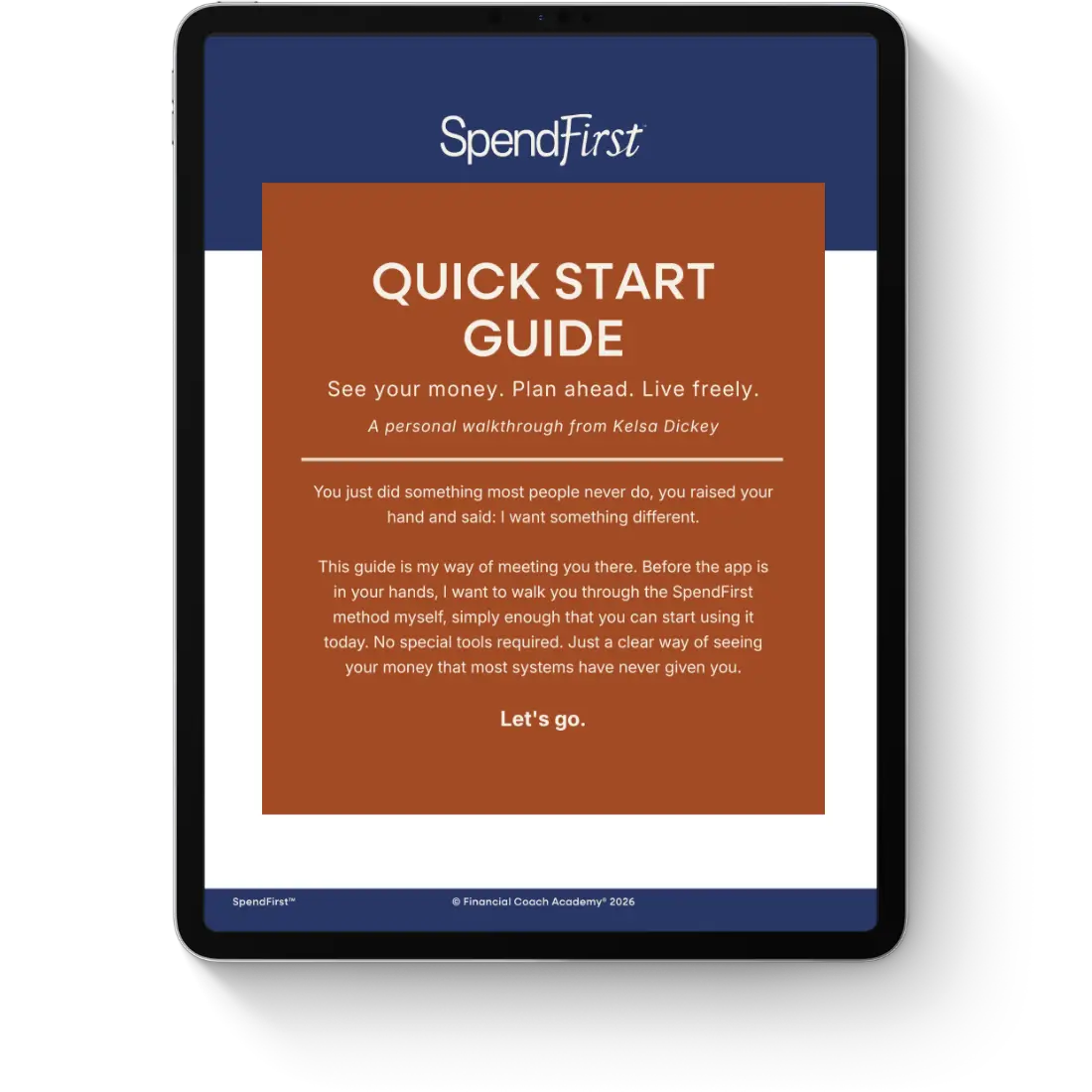
The only thing a standard monthly budgeting worksheet is good for is helping you get organized at the start. You want one that’s thorough and lists a lot of different expenses so it jogs your memory. The free Quick Start Guide walks you through sorting yours.
Tip: It’s easiest and fastest to list all your expenses first, then go through and color code them by these three categories. Feel free to add, remove or rename expenses to fit you and your life.
Once your expenses are sorted by category, it’s easy to put specific changes in place to manage each one.
Getting control of your money takes more than making a list of your expenses (which is all a typical budgeting worksheet really is). You want to actually manage each category in a specific way, and that happens on payday.
Once you KNOW your numbers, you can MANAGE your money. That’s your next step, and it’s how you stop living paycheck to paycheck.
The three ways your money moves is Chapter 3 of SpendFirst, out November 11. Pre-order is open now.