A lot of people have one savings account doing two jobs. It’s supposed to be there if something big happens, but it also ends up paying for the tires, the furnace and the holiday gifts. So every time one of those comes up and the balance drops, it feels like you’re going backward.
That’s the difference between a sinking fund vs emergency fund. An emergency fund is for the big, life-altering events that could happen to anyone, while a sinking fund is for the expenses you know are coming, even if you don’t know exactly when. When each one has its own account, each one can do its job.
What an emergency fund is for
Your emergency fund is for the big, unexpected, life-altering events that don’t happen to everyone but could happen to anyone. That means things like a job loss, a major medical event, a death in the family, a home disaster like a roof collapse or a flood, or a long-term disability.
Those are different from something like a car repair. A car repair is irregular, but it’s inevitable. A job loss? That’s an emergency. The goal of an emergency fund is to have money that isn’t spent, except when one of those true emergencies happens.
What a sinking fund is for
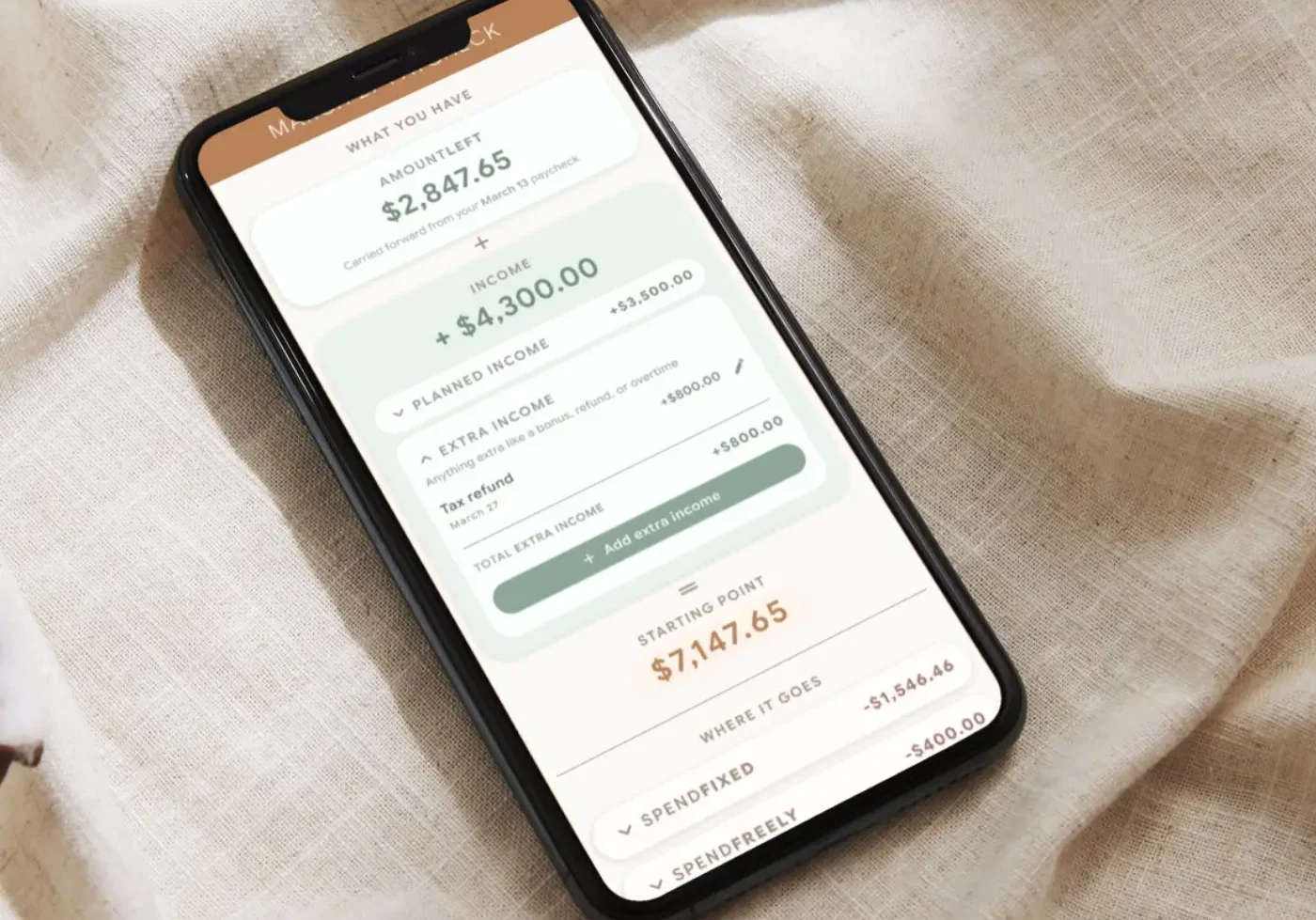
A sinking fund is money you set aside for something you know is coming, even if you don’t know exactly when. That might be car repairs, home repairs, new clothes after another growth spurt or the next family vacation. In SpendFirst, this is SpendFuture: money set aside each paycheck for expenses that do not happen every month, so they stop feeling like surprises.
None of these are emergencies, just part of life, and planning for them by the paycheck is what keeps them from feeling like one. This kind of savings is meant to be spent.
Why one account can’t do both
Not long ago I coached a fellow financial coach. She knows money and teaches it for a living, and even she was feeling stuck.
For four years she’d been caught in the same loop. She would build up her emergency fund, then something would happen and she’d use it. The air conditioner went out, then the furnace, then the car needed work. She’d build the fund back up and use it again, and every time she pulled from it, guilt followed. The balance dropped, and so did her sense of security.
She wasn’t mismanaging her money. The problem was that her one account was trying to do too many jobs. When everything comes out of one pot, every withdrawal feels like something bad has happened, even when the expense is completely normal and predictable over time. The balance turns into a scorecard.
What helped was separating the money. Her emergency fund went back to covering true emergencies only, and the car and the house each got their own account, because those costs don’t come every month but they do come eventually. Now when the furnace needs work, she pays for it from the account she built for exactly that, and there’s no guilt attached.
How much goes in your emergency fund
You’ve probably heard the rule: three to six months of living expenses. But why three or six months, and not two, or twelve? The number feels random, and a random number is hard to stay motivated for.
So instead of starting with a rule, start with a question: what kind of emergency worries you most? Not every possible one, just the one or two that keep you up at night. Maybe it’s losing your job, your spouse losing theirs, or both of you losing them at the same time. Maybe it’s one of you getting sick and not being able to work, or something happening to your home.
Then ask yourself: if that happened, what would change financially? I know, this isn’t fun to think about. But thinking it through now is so much easier than figuring it out in the middle of a crisis.
When clients get hit with an emergency, most of them buckle down right away. So go through your expenses and sort them three ways:
- Keep. A place to live, groceries, lights, gas. Probably your debt payments and student loans too, so you don’t fall behind.
- Reduce. Retirement or college contributions you could lower for a while.
- Eliminate. The landscaper, manicures, the housekeeper, eating out, the daily coffee run, the date night sitter. They’re nice to have, but you don’t need them in a crisis.
Then add anything that would be new. If you lost your job, you might be paying for your own health insurance. If your spouse went back to work full-time, you might need after-school care.
Everyone’s list looks different. What’s a luxury for one person is a necessity for someone else. Add up your keep, your reduce amounts and anything new, and you’ve found your emergency baseline. Say your expenses are $5,000 a month right now, and in that scenario they’d drop to $3,500. Your baseline is $3,500.
You don’t need six months of that right away. Start with one month, and when you hit it, celebrate it, because you now have one month of breathing room if something goes wrong. Then aim for two, then three.
Some people feel comfortable with three months, others want six, and some want a year. There’s no right answer. The answer is whatever helps you sleep at night.
How much goes in your sinking funds
List the expenses you can see coming this year: car registration, insurance premiums, tires, the holidays, back-to-school, the vet. Add them up and divide by 12, and that’s your monthly SpendFuture amount. Then set it aside the way that fits your rhythm, a little from every paycheck or all at once on one day each month. The Year Ahead planner does the math with you.
Your emergency fund gets built from SpendFlex, the margin left after your SpendFixed bills, your everyday spending and your SpendFuture are covered.
Sinking fund vs emergency fund at a glance
| Sinking fund (SpendFuture) | Emergency fund | |
|---|---|---|
| What it covers | Expenses you know are coming: car repairs, holidays, annual bills, home repairs | Big, life-altering events: a job loss, a major medical event, a home disaster |
| How often you use it | Regularly. That’s the point | Rarely, ideally never |
| How you fund it | A set amount every paycheck | From SpendFlex, until it hits your goal |
| When you spend it | Plan on it | Refill it as soon as you can |
| How many accounts | As many as you need, one per category | Usually one |
If this sounds familiar
If you’ve been saving faithfully and still feel uneasy, you’re not bad with money. Most people are taught to save, but very few are taught how to give that savings a job.
You’re not the problem. The missing piece is the system you’re using.
See every expense coming in the next 12 months and how much to set aside from each paycheck, so your emergency fund can stay an emergency fund.
Planning for the expenses that don’t happen every month is Chapter 6 of SpendFirst. The three layers of savings, including how to find your emergency baseline, are in Chapter 16.