Season 2, Chapter 15 · October 15, 2026 · 13:53 min
You set the goal: $500 into savings every month. Then an unexpected expense comes up, you save $400 instead, and even though you moved forward, it doesn’t feel like it counted. Plenty of advice on how to reach your financial goals stops at picking the right number, and the number is rarely where things fall apart. What falls apart is the how, one pass/fail target with no room for the month you’re actually living.
In Chapter 15 of SpendFirst, you get a structure that holds up when life gets messy, and a way to make your goal part of your everyday conversations instead of a private hope.
Key Takeaways
- A month where you save less than you planned still counts as progress once your goal has three targets instead of one.
- Setting a Best goal, the number that feels a little bonkers, leaves room for things to go better than you expected. People hit it more often than you’d think.
- When only one person in a household can see the whole picture, the other one can’t help set the goal. Seeing it together changes the conversation.

Three goals instead of one
With Good-Better-Best goals, you set three targets. A Good goal is your floor, the amount you’ll hit unless something goes really wrong. A Better goal is a stretch: a few things go your way, or you show up a little stronger than usual. A Best goal is the dream scenario, where you have no idea how it would happen.
There’s more than one way to set these up. If you’re saving for a vacation, it might look like $400, $650, or $1,000 saved this month. If paying off debt is the priority, you might set it by time instead: 18, 15, or 10 months.
Hit your Good goal and it’s a win. Hit your Better goal and you can feel the momentum. Hit Best, and you start setting goals differently, because you’ve seen what’s possible for you.
Nina and Rob weren’t in debt, weren’t fighting about money, and were saving a little. Nina was still worn out from being the one who juggled every what-if, while Rob said, “I think we’re fine, she just worries.” Nina summed up what she wanted in five words: “I want to feel comfortable.” Once Rob could see what she’d been carrying, he started looking at what was coming and weighing in on decisions. They still didn’t agree on everything, like most couples, but they were finally working from the same playbook. It’s hard to set goals together when only one of you can see what’s ahead.
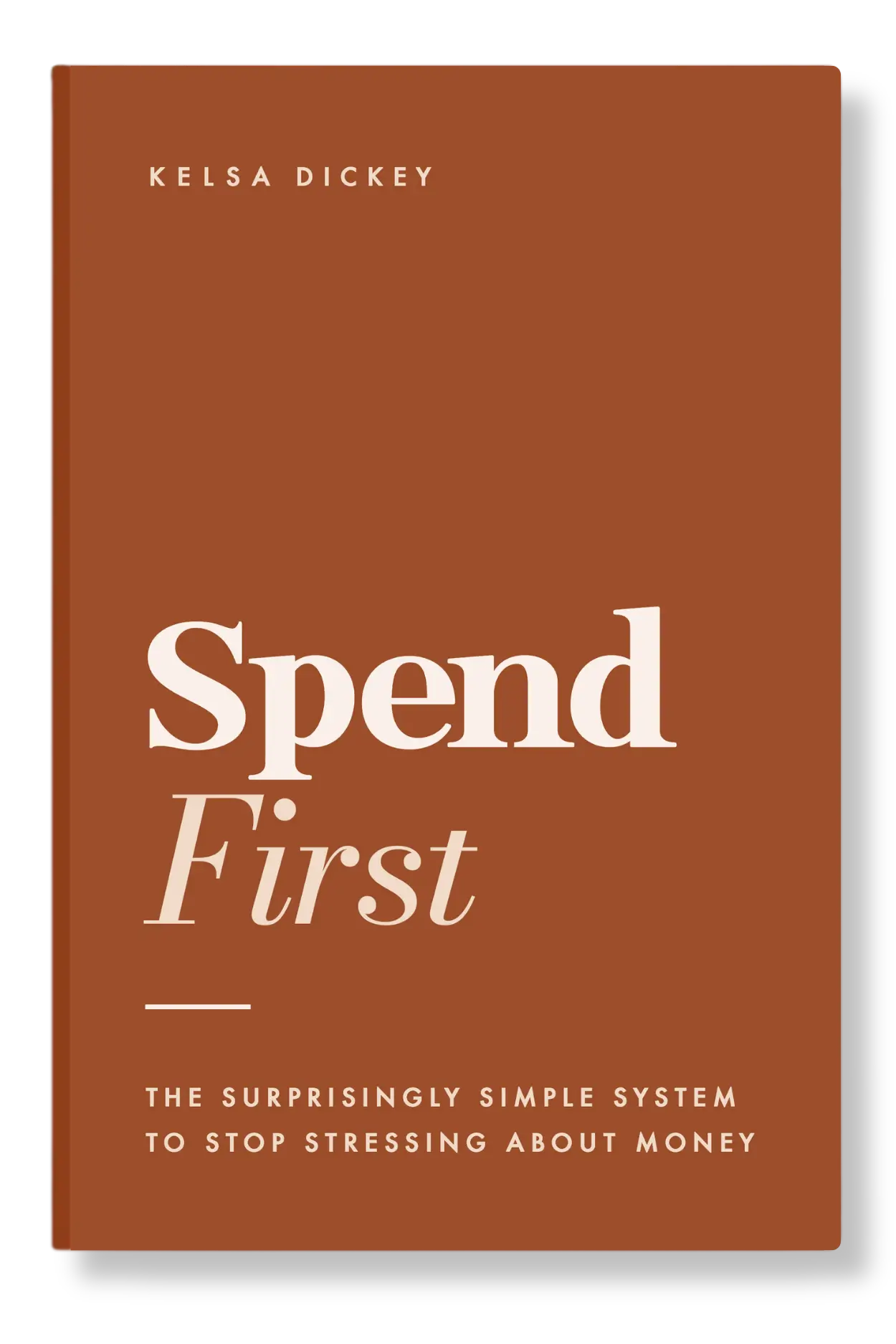
SpendFirst
The Surprisingly Simple System to Stop Stressing About Money
Out November 11. Pre-order now and start reading before then.
We'll take you straight to Amazon. Pre-order the paperback or hardcover, then send us your receipt to claim your bonuses: an advance ebook copy, a $47 pass to the Paycheck Plan Workshop, and more.
Already pre-ordered? Claim your bonuses here.
Application
Set one Good-Better-Best goal. Pick one goal, saving, debt payoff, whatever matters most right now, and give it a Good, a Better and a Best target. Write it down. Then tell one person what you’re working toward, and notice how it feels to say it out loud.
Get notified of the next episode
Would you rather work through it with someone?
Everything here is built to work on your own, the episodes, the book, the free tools. For most people that is enough. If you would rather work through it one-on-one, your money goals, a financial decision you are weighing, or your business strategy, I may be able to help. Just you and me, focused on whatever is actually in front of you.