Season 2, Chapter 13 · October 1, 2026 · 16:23 min
Planning ahead probably felt pointless before, and not because you were not capable of it. Traditional budgeting kept you looking backward, tracking where the money went and accounting for where things went wrong. After an hour of that, who has the energy to think about the next few months? So when you go looking for how to plan your finances for the year, you are already out of the energy it takes, and you stop trying to get ahead. That makes complete sense. Why plan when the plan never holds?
Chapter 13 of SpendFirst is what happens when the plan does hold because you have a system that works underneath it. Planning ahead stops being a wish and becomes a fifteen-minute habit. It works because you already budget by paycheck, so the year is built out of units you can actually see.
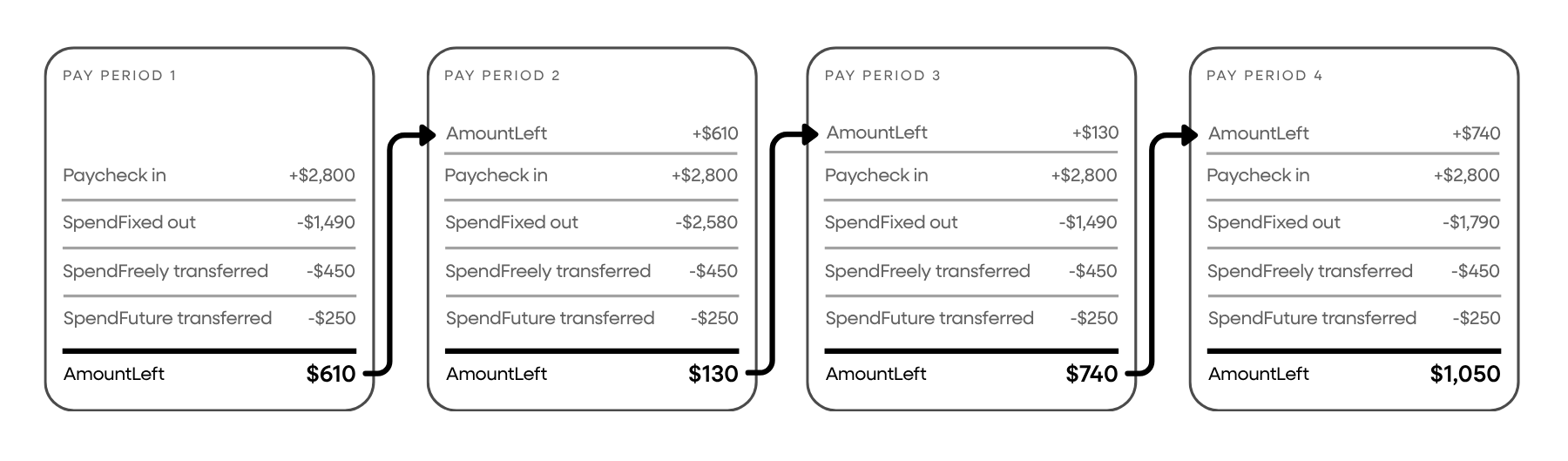
Illustration from this chapter:
Key Takeaways
- The reason your progress keeps getting erased is because you could not see far enough ahead to prepare for what was coming. Three months of visibility fixes most of it.
- You make a different decision on a calm Sunday than you make in a scramble. Planning ahead is how you get to make it on the Sunday.
- You do not need to see everything coming. Plan for 75% and the rest gets manageable.
How to plan your finances for the year, in three parts
The planning ritual in this chapter has three parts and takes less time than most people expect.
Past is a quick glance at the last pay period. Did the bills clear, did the transfers go through, did anything unexpected show up. Usually under two minutes.
Present is what you need right now. Which bills are due before the next paycheck, whether the SpendFreely transfer already happened, whether there is a one-time expense in play. Check the amounts on your SpendFixed list while you are there. If you have kids in rec sports, you already know how this goes. Sometimes you find out about a tournament fee the same week it is due. Five to ten minutes.
Future is where the bulk of your time belongs, and it is the part almost everyone skips. You look at your calendar for anything with a financial impact. Birthdays, weddings, graduations, trips, school events, holidays. You check what you have already saved in your SpendFuture categories. You scan the category list, which is where surprises like to hide, because seeing the word medical is often what reminds you about the appointment you booked in August.
Then you look beyond the recurring, at the things that show up in passing conversation or at 2 a.m. Those are easy to forget precisely because they are not recurring yet.
This is the same check-in whether your paycheck is the same every time or you are working with income that does not arrive on a schedule. Either way, being able to see ahead is what’s going to help.
The Year-at-a-Glance Planner comes with the book. It is a simple visual of the whole year at once, month by month, including the categories people forget to plan for until it is too late. Customize it for your life, then pull it up when it is time to plan and let it jog your memory.
Do it a few times and it stops feeling like a task. You start noticing things before they arrive, and you feel prepared instead of surprised. Once planning ahead is a habit, you have room to do something with it, which is where setting financial goals that are actually yours comes in
SpendFirst
The Surprisingly Simple System to Stop Stressing About Money
Out November 11. Pre-order now and start reading before then.
We'll take you straight to Amazon. Pre-order the paperback or hardcover, then send us your receipt to claim your bonuses: an advance ebook copy, a $47 pass to the Paycheck Plan Workshop, and more.
Already pre-ordered? Claim your bonuses here.
Application
Open your calendar and look at the next three months. Write down everything with a dollar attached to it, and put a number next to each one. If you are not sure, estimate high.

Get notified of the next episode
Would you rather work through it with someone?
Everything here is built to work on your own, the episodes, the book, the free tools. For most people that is enough. If you would rather work through it one-on-one, your money goals, a financial decision you are weighing, or your business strategy, I may be able to help. Just you and me, focused on whatever is actually in front of you.