Season 2, Chapter 1 · July 9, 2026 · 15:56 min
| You’ve tried budgeting, maybe more than once. And if it keeps falling apart, you’ve probably started to wonder if you’re the problem. You’re not. This episode, Chapter 1 of SpendFirst®, is about why traditional budgeting keeps failing capable people, and what to do instead. |
Key Takeaways
- Why traditional budgeting keeps failing capable people for structural reasons, not personal ones
- How “trying harder” keeps getting erased by the next surprise expense
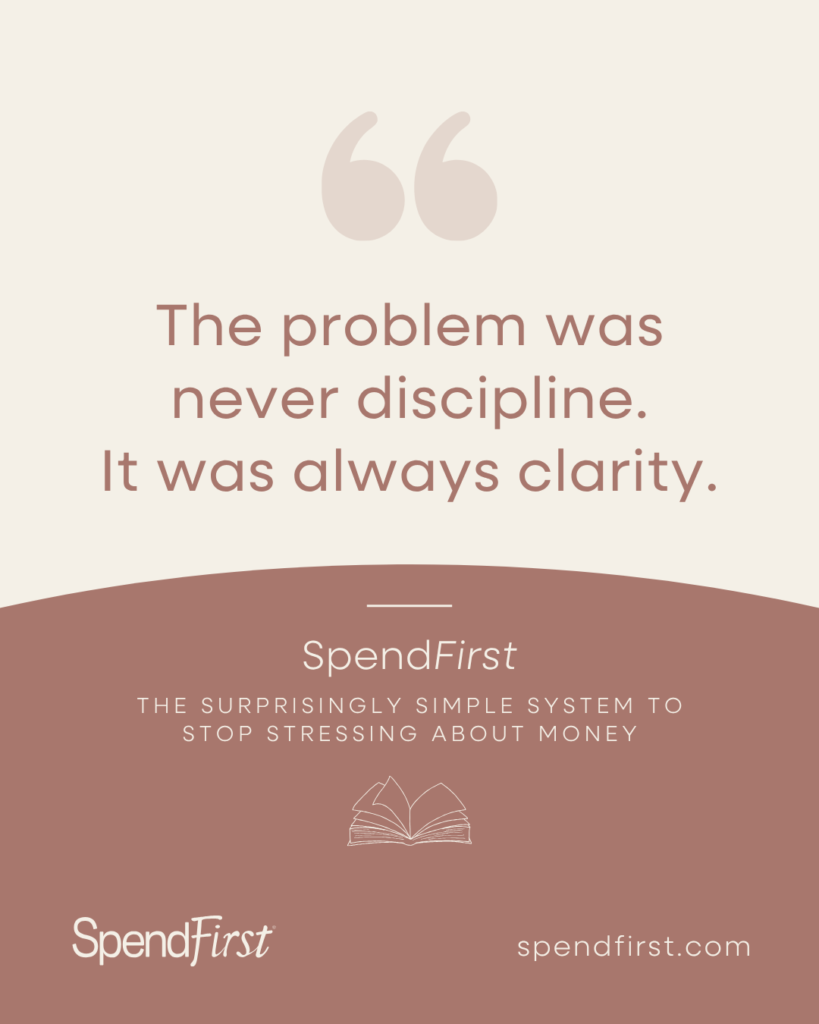
- Why clarity, not discipline, was the thing actually missing
If you’ve ever wondered why budgeting doesn’t work for you, you’re asking the right question, and the answer is more reassuring than you’d expect.
Traditional budgeting is built around the calendar month and organized by category. You decide how much to spend on groceries, gas, and dining, then try to stay inside those lines for thirty days.
The trouble is that real life doesn’t arrive in tidy monthly buckets. Bills cluster around one paycheck, and a car repair lands the same week as a birthday. So the first unexpected expense breaks the plan, and most people conclude they’re the problem.
They’re not; the structure is. A month-and-category system can tell you what already happened, but it can’t show you what’s coming, or how today’s spending connects to your next paycheck. Without that forward view, every decision is a guess.
SpendFirst takes a different starting point: See how your money moves before you change a single thing. Instead of budgeting by the month, you budget by paycheck, which is where Chapter 2 picks up. This episode, Chapter 1, makes the full case for why the old way kept failing, so you can finally stop blaming yourself. For the deeper dive, read why budgets fail.
SpendFirst
The Surprisingly Simple System to Stop Stressing About Money
Out November 11. Pre-order now and start reading before then.
We'll take you straight to Amazon. Pre-order the paperback or hardcover, then send us your receipt to claim your bonuses: an advance ebook copy, a $47 pass to the Paycheck Plan Workshop, and more.
Already pre-ordered? Claim your bonuses here.
Application
Write down the three to five things that have frustrated you most about managing money. Be specific. Not “I’m bad with money,” but the actual moments, like “I can never figure out why I’m short at the end of the month.”

Get notified of the next episode
Would you rather work through it with someone?
Everything here is built to work on your own, the episodes, the book, the free tools. For most people that is enough. If you would rather work through it one-on-one, your money goals, a financial decision you are weighing, or your business strategy, I may be able to help. Just you and me, focused on whatever is actually in front of you.